When travelers around the world are always going to the most famous destinations, don't you ask yourself: Why are they all planning the same itinerary? Don't they have something different to explore? Well, someone has rightly said: "Don't follow the crowd, pave your own path, and find yourself.”
In the present age, travelers are not thinking, or to say it, they are not given the time to think out of the box. With thousands of suggestions on the best places to visit and an infinite amount of content on vacation spots, everyone is just following the trend.
But we will take you to the roads never taken before, to places that will make your soul lighten up, and your whole body relax like it never has. The following destinations offer authentic cultural insights and unique experiences not found elsewhere, all without the tourist crowds.
Read along and find out the 5 best non-ranking destinations that are worth a visit once in a lifetime.
Destinations That Don't Rank But Are Paradises
1.San Blas Islands, Panama
Perched on the Caribbean coast, the San Blas Islands in Panama are a hidden gem and part of the autonomous territory Comarca de Guna Yala. Sometimes called Kuna Yala or Guna Yala, the San Blas Islands are known for their pristine beaches & clear waters, as well as the Indigenous Guna Yala culture. This hidden gem offers exactly what present travelers are seeking: the opportunity to go completely off-grid and engage in eco-conscious tourism.
Here, you will not be staying in a luxurious resort bubble; rather, you will live alongside the Guna people, surrounded by their culture, food, hospitality, and traditions. You will have the ocean, sand, and stars to get mesmerized with. While the island welcomes numerous visitors for vacation, you will not find a crowd of travelers, and you will always experience its authenticity due to the government’s controlled tourism measures.
Things to do in the San Blas Islands
Island Hopping
Island-hopping tours offer a chance to explore multiple uninhabited islands in a single day. This is one of those rare experiences that feels like stepping into a living postcard, where you will explore each island scattered like jewels across the Caribbean, offering different shades of paradise. You will have the opportunity to tour with the Guna Yala community itself. You will explore Isla Perro, also called Dog Island, famous for its shipwrecks and snorkeling opportunities. Other islands that you will cover include Isla Chichime, Isla Yansailadup, Isla Wailidup, and Isla Aguja, all famous for vibrant reefs, clear waters, welcoming Guan families, and swimming and relaxation opportunities.
Authentic Guna Hut Stay
Imagine staying in a hut built with palm leaves, bamboo, and driftwood, all designed with thatched roofs, sand floors, and walls woven from natural fibers. Accommodation options here include Isla Chichime, Isla Wailidup, Isla Tansailadup, Isla Aguja, and Isla Perro, which are unlike any other lodging. You will not find luxury in the conventional sense, but premium stays that offer immersion, simplicity, and a connection with nature and culture.
Cultural Immersion
As you will live alongside the Guan Yala people, you will be exposed to their culture from time to time. You will be welcomed to communal meals serving freshly caught fish and coconut rice; learn about Guna myths and stories about the sea and their ancestors; purchase molas directly from artisans; and have a chance to participate in traditional dances or ceremonies.
Star-Gazing
One of the most magical experiences you can have in your lifetime. Due to no light pollution, no cities, resorts, or highways, limited electricity and infrastructure, and a 360-degree horizon, you will feel like you are looking up to the heavens, and angels will fly to you with all the blessings. You will see the Milky Way arc like a glowing river and numerous shooting stars flying off just for your eyes.
2.Luang Prabang, Laos
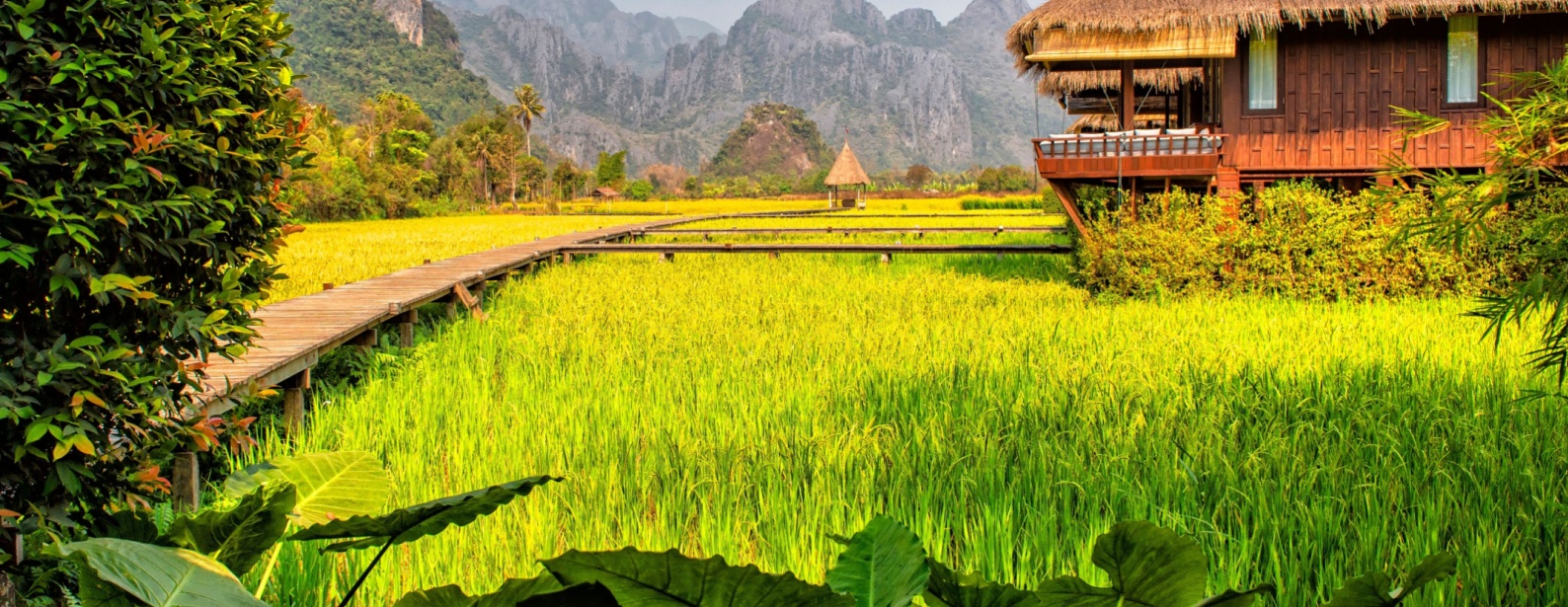
Situated in northern Laos, Luang Prabang is a beautiful and magical paradise nestled between mountains and rivers. Often called the “Jewel of Indochina,” Luang Prabang stands as a UNESCO World Heritage city known for its golden temples, French colonial charm, and serene natural surroundings. Stepping into this city, you will not find heavily commercialized spaces; instead, you will connect with nature like you never did, and every sunrise will be a ritual.
Here, you will have the opportunity to merge with its authenticity, spiritual calm, and cultural depth. Visit this soul-refreshing hidden gem in Laos, and find the balance you need in life.
Things to do in Laung Prabang
Tak Bat - Morning Alms Ceremony
Experience a meditative time in the city. Tak Bat is a daily spiritual ritual in this city, during which Buddhist monks walk silently through the streets, collecting food offerings from locals. This living spiritual practice has been part of Luang Prabang since the 14th century. Taking place before sunrise, usually around 5:30-6:00 AM, you will see monks in saffron robes from local temples moving in silence against the golden morning light. Not just that, you find peace and a different perspective on simplicity, gratitude, and community while experiencing the whole scene, the humility of monks, and the generosity of locals.
Wat Xieng Thong (Temple of the Golden City)
The most iconic temple in Luang Prabang, built in 1560, Wat Xieng Thong is renowned for its golden mosaics, sweeping roofs, and serene atmosphere. You will find this iconic temple about a 10-minute walk away from the Luang Prabang Tourism Information Center. As one of the most important Buddhist monasteries in Laos, visiting here feels like entering a golden sanctuary where time bows in reverence. Sit in silence in a breathtaking atmosphere where you can pause, breathe, and feel connected to something timeless.
Kuang Si Waterfalls
Explore this three-tiered waterfall that is about 18 miles south of Luang Prabang. You will be surrounded by green, lush forest, get a chance to swim in mineral-rich turquoise water, and witness hundreds of butterflies and birds. You will also have the opportunity to explore the bear sanctuary and see rescued Asiatic bears. Enjoy your time picnicking or simply lounging beside a pool, and stand beneath the waterfall to experience its mesmerizing feel.
Mount Phousi
A 100-meter-high hill crowned with Buddhist shrines and a small temple, where you will see the most enchanting sunsets. You can set out to discover small Buddha statues and sacred spots along the stairways and capture the golden glow over the Mekong and the rooftops of Luang Prabang. At this spot, you will also find meditative areas and quiet corners where you can reflect amid the spiritual atmosphere.
Pak Ou Caves
Explore the most mystical and culturally rich site near Luang Prabang, where you find two limestone caves filled with thousands of Buddha statues, each one a silent testament to centuries of devotion. You will have the chance to see more than 4,000 Buddha statues donated by worshipers over hundreds of years. Here in these caves, you can sit quietly and absorb the spiritual energy.
Luang Prabang Local Cuisine
Enjoy the delicious dishes in the city and let your taste buds explore something new. You can set out to the famous night market or family-run restaurants like Tamaring Restaurant, Dyen Sabai, or Saffron Coffee and try out their traditional Lao dishes. Get yourself laap, a minced meat salad mixed with herbs, lime, and chili, which is also considered the national dish of Laos. Next, you can get your hands on French-inspired pastries, join in for a cooking class, try rice whisky called "lao lao," and enjoy street buffets at the night market.
3.Faroe Islands, Denmark
Located between Iceland and Norway in the North Atlantic region, the Faroe Islands are a self-governing territory under the Kingdom of Denmark. Famous for its dramatic landscapes, towering cliffs, waterfalls plunging into the sea, wildlife, and grass-roofed houses that blend with nature, visiting here, you will have the chance to be away from all the noise of the world and enjoy an authentic scene like no other. Travelers visiting here will feel like stepping into a living painting where cliffs kiss the clouds, and the ocean roars the secrets of ancient power.
Things To Do in the Faroe Islands
Sovagsvatn Lake
A visit to this lake will be the most surreal experience you will ever have in life. You will get confused as well as mesmerized by the power of nature, as Sorvagsvatn Lake is famous for its optical illusion, which, when viewed from a certain angle, makes the lake appear to hover hundreds of meters above the Atlantic Ocean. Here you can hike to the viewpoint, a 1-2 hour trek, to see the most striking illusion; you can also set out to explore the Traelanipa cliffs, also known as the Slave Cliff. Enjoy scenic views and absorb the raw power of nature at this lake, also known as “the Lake Above the Ocean.”
Visit the Drangarnir Sea Stacks
Explore the nature's cathedral carved from stone and sea. The Drangarnir Sea Stacks are two dramatic sea stacks between the islands of Vagar and Tindholmur. Hop on a boat or go on a challenging hike across private land, and witness these large stacks standing as a geological masterpiece. While hiking the trails to this breathtaking natural formation, you will also find puffins and seabirds nesting nearby.
Explore Mykines Island
Set out to explore the westernmost island of the Faroes, famous for its puffin colonies, rugged cliffs, and a single village with turf-roofed houses. Being a home to thousands of puffins, you will witness a swarm, especially in summer, and also watch them up close as they nest in burrows along the cliffs. Here, go on a hike through dramatic trails to explore the Mykinesholmur islet and its lighthouse, and also find yourself crossing a footbridge that hovers over the ocean. Another experience you will find here is exploring the tiny settlements of Mykines, which are traditional turf-roofed houses.
Explore Torshavn
Get a chance to explore one of the smallest capitals in the world, Torshavn. Here, set in its historic district, it is known for turf-roofed government buildings dating back to Viking times. Visit the Skanshin Fortress, situated on the coast, and witness its cannons and sweeping views of the harbor. You can also dive into the local fishing culture and take fishing boat tours. Not just that, travelers will also have a great nightlife experience at its lively pubs and music venues, where you will enjoy the night with locals.
4.Soloman Islands
The Solomon Islands, a remote South Pacific nation of 1,000 islands, are known for their WWII history, pristine reefs, and authentic Melanesian culture. Also known as the Pacific’s Hidden Paradise, or as locals call it, the Hapi Isles, the Solomon Islands is an archipelago of six major islands and hundreds of smaller ones, all surrounded by coral reefs and lagoons. This is perfect for new-age travelers, as it offers authentic experiences and an opportunity to immerse themselves in local culture and traditions.
Things to do in the Solomon Islands
Visit to Sjull Island
Get an opportunity to explore the most mysterious and culturally unique places on earth. Here you will not just find scenic views or spots but sacred sites that tell stories of warrior traditions, ancestral spirits, and the island's history. This would be your first time encountering living history, where skulls and relics from the ancient era are preserved in spirit houses. If you have a local guide with you, they will take you back to the old days, narrating ancient legends, rituals, and the meaning behind everything you explore. Lastly, you can combine your visit with Munda diving, where you will explore nearby WWII wreck sites underwater.
Shell Money Making in Malaita
This would be the most unique moment of your life, as you will discover a new way of making currency. Malaita, in the Solomon Islands, is the last place on earth where tiny shell discs are polished, strung together, and used as currency in ceremonial exchanges for bride price, land agreements, and reconciliation rituals. Get a chance to be invited by the locals to make this currency, where you can try polishing or threading shells yourself. You can also attend workshops to watch artisans at work making currency from shells and learn all about the process.
Marovo Lagon Homestays
Stay in one of the most authentic accommodations ever in Soloma Island, where you will be with local families inside the world's largest saltwater lagoon. Not just that: the Marovo Lagoon, a UNESCO natural wonder in the Western Province,l stretches over 700 square kilometers. You will be staying in houses or huts built on stilts, often woven with palm leaves, with thatched or tin roofs.
Here you will share meals, stories, and traditions with locals. The mornings will feel most satisfying as you will wake up with the sounds of waves, from where you can paddle dugout canoes and snorkel right off the doorstep. Another best part of visiting here is hands-on learning in fishing, weaving, and cooking with local ingredients, straight from the locals.
Kastom Dances & Panpipe Music
Dive into traditions like Kastom dances performed during ceremonies, celebrations, and rituals, and panpipe music unique to the Solomon Islands, played on bamboo pipes of varying lengths that produce haunting, layered harmonies. Here you can attend village ceremonies such as weddings, festivals, or reconciliation rituals, and listen to a panpipe orchestra, where a group of musicians plays together. You might also be invited to a dance and try panpipes with guidance.
Surfing Untouched Waves
If you are into surfing or even if you are not, the feeling that anyone can have gliding over these untouched waves is unlike any other. This is the hidden surfers' paradise scattered across the Solomon Islands, especially in the Western and Isabel Provinces. Enjoy a surf in solitude where only you, locals, your surfboard, and waves exist. Name the unnamed waves, surf on them, surf alongside dolphins, or spot seabirds overhead, and enjoy the slow, traditional village life that flows with raw energy.
5.Tuvalu
Known as the least visited nation in the world, Tuvalu is a Polynesian island nation in the South Pacific, located halfway between Hawaii and Australia, north of Fiji. Tuvalu is also the world’s smallest country, known for its Polynesian culture and marine beauty. This destination is on this list because it is the most remote place on Earth and has received only 200-300 international travelers in recent years. Only accessible by flights from Fiji with limited schedules, visiting here will make you one of the few travelers who have explored or even set foot on this island. You will not find any resorts, or even any tourists for sure, and you will be in the midst of village life and natural simplicity. So step off the map and visit a world where time slows down.
Things to do in Tuvalu
Explore the Funafuti Marine Conservation Area
Explore this vast protected lagoon and be amazed by the pristine marine life and fragile beauty. Imagine spending your time all by yourself in the vast lagoon that covers about 33 square kilometers with reefs and islets. You can also set out for a walk on the deserted motus (islets) and stroll along untouched beaches like Fualopa and Tepuka, where no one may have ever stepped before. For more fun and engaging days here, you can go snorkeling or diving to the vibrant coral gardens in the lagoon, where you will encounter tropical fish, turtles, and sting rays, something you will never forget. Not just that, lagoon boat rides, witnessing WWII relics, and birdwatching are some of the additional experiences you can gain here.
Village Immersion
One of the most unique and raw experiences you will have in your life is with the Tuvaluans, when you will be staying in their village. Experience the daily lives of the locals, how Tuvalans live, what they eat, and the culture and traditions they follow. You can enjoy village immersion in the main village, Funafuti Atoll, the capital, or for a more raw and experiential scene, you can visit Nanumea, located on a slim ring of land and lagoon at Tuvalu’s northernmost edge. Here, see how children and adults fish with handlines, a practice passed down through generations. See how numerous families in the village grow pulaka (swamp taro), harvest coconuts, and rely on the lagoon for food, which we call subsistence living.
Staying here, you will have the chance to join communal routines such as sharing meals, attending church gatherings, and listening to storytelling sessions by elders. Here you can join fishing trips, catch your own fish with locals, and observe and help craft wooden canoes, a skill unique to Nanumea.
Fatele Traditional Dancing
Have you ever joined up with a group of traditional dancers? If not, it's your chance! Watch, learn, and perform this most iconic cultural dance of Tuvalu, a living tradition that embodies the spirit, rhythm, and communal joy of the islands. Performed by village locals themselves during celebrations, ceremonies, and gatherings, Fatele is a traditional Tuvaluan dance and song performance that builds intensity. Watch how the dance starts softly and gradually rises to a powerful, energetic climax. Not just that, you will also experience how a community comes together and contributes to this tradition, making it a shared cultural heartbeat. Here, sit among the locals, watching the dance unfold in its authentic setting, keep your fingers crossed to get invited to dance or join in for simple movements, and listen to the story that unfolds with every dance step.
Local Feasts & Island Hopping
Discover new flavors and experience different rhythms of life on small, remote islands. For local feasts, you will have the opportunity to join in for communal meals where Tuvaluans gather to share food, music, and stories. The meals are centered on fresh seafood, such as tuna, reef fish, and lobsters; pilaka (swamp taro); coconuts; and breadfruit. You can participate in preparing the meals, join in the after-meal fetele dance and songs, and sit shoulder to shoulder with locals, sharing laughter and stories. As for island hopping, you can cover Funafuti Atoll, Nanumea, Nukufetau, Nui, and Naumaga Islands by small boat and enjoy the distinctive experiences.
Explore Related Stories