What do you imagine when you hear Arizona? Before you decide to fly into Flagstaff, land in Tucson, or fly into Sedona, you must ask: What does Arizona promise for the fall season?
Dramatic landscapes, yellow tones across the deserts, distinct geological formations, and a diverse ecosystem. Everything reaches its peak beauty as fall approaches.
Fall, indeed, is the best time to visit Arizona, as the weather changes from extremely hot to pleasant. When summer daytime highs reach around 100F, the desert drops to 70°F–90°F by October.
It is not just about the weather but also about the colors and landscape you won’t find elsewhere. So here's the short version and a quick guide to help you plan your Arizona visit this fall.
Why Arizona in Fall Means Three Different Trips?
The best way to explore Arizona in the fall is to experience the core. This won’t be your regular trip, but an extended vacation with three different cities. While most states give you one fall season experience, Arizona gives you three. Sedona, Flagstaff, and Tucson sit at wildly different elevations, roughly 4,500, 7,000, and 2,400 feet. That spread means one state visit can deliver three completely different autumn experiences depending on where you land.
Flagstaff looks like a world of ponderosa pine forest, whereas aspens turn to a mystical gold city by mid-September. Drop south to Tucson, and you will be hit by summer heat finally breaking into warmth.
Mountain color, red rock scenery, and desert warmth are all within a few hours of each other, so the question is not which is best, but how to combine all three to make it a perfect fall experience in Arizona.
What Is The Best Month To Visit Sedona For Fall Colors?
The red rocks draw visitors year-round, but fall adds something unique to Sedona. Sitting at roughly 4,500 feet, Sedona is high enough for cooler fall evenings but low enough to avoid the early cold snaps of Flagstaff.
With cottonwoods and sycamores turning gold along Oak Creek against all that red sandstone, this is when Sedona turns into a city of golden hues. Remember, it is a short window, and travelers must time it right to catch the unique colors.
September or October for the Red Rock Views
September is quite warm, with temperatures in the low 90s. Foliage has not yet changed; however, the color transition is visible. Sedona fall weather in October also means high temperatures up to the mid-70s, while nights turn cool in the 40s. Creekside trees change color, and the vividness of Oak Creek Canyon's fall colors shifts by late October. While October remains popular with travelers, those who want a bit more quiet may choose to hike Cathedral Rock and Devil's Bridge.
How to Reach Sedona for a Mystical Fall Season?
The nearest airport to Sedona is Phoenix Sky Harbor Airport, which serves international and domestic connections. Sedona has a regional airport that handles only small charter and private aircraft. Phoenix is just 120 miles south of Sedona, offering easy car rental service for a quick commute.
What Is The Best Month To Visit Flagstaff For Fall Colors?
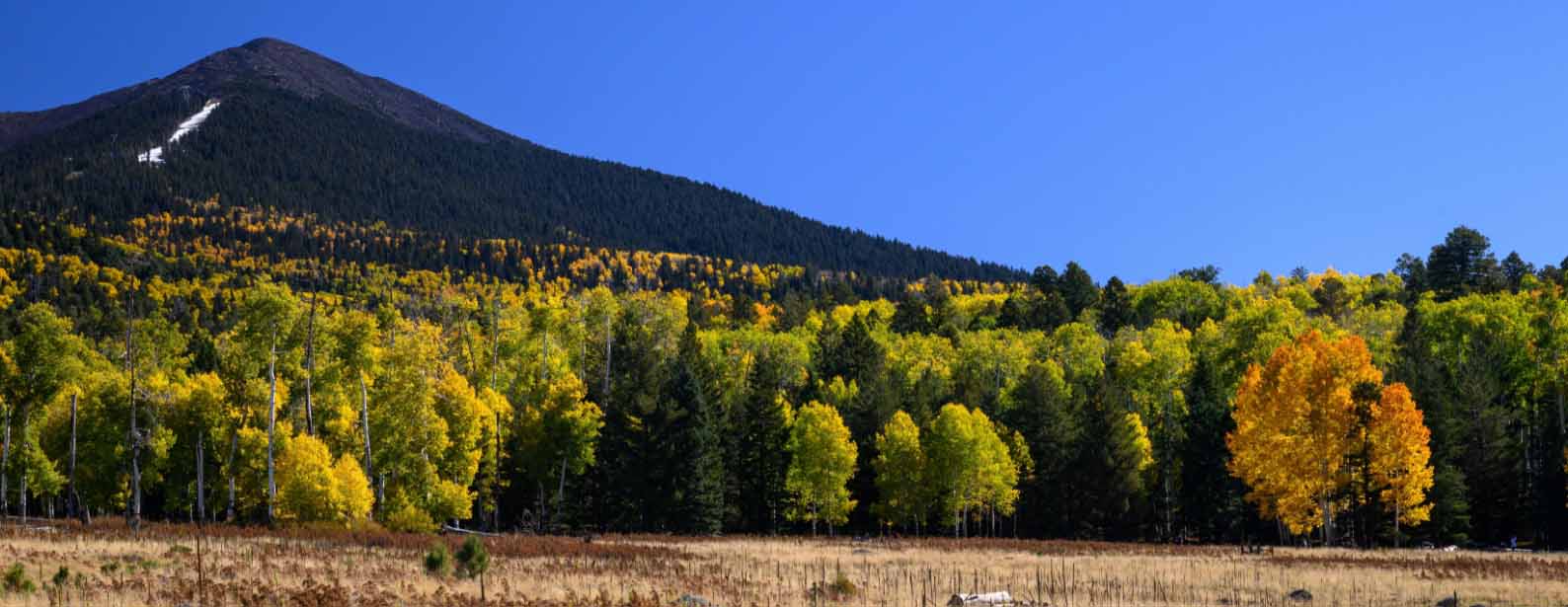
Flagstaff is the only city in Arizona that witnesses fall like most other regions around America. In late autumn, the city is filled with golden aspen trees against dark ponderosa pines. Fall transitions quickly in Flagstaff compared to Sedona and Tucson. You'll feel like the change in one week is so drastic that, in a blink, the fall will take over the city.
When does fall foliage peak in Flagstaff?
Fall foliage turns up in Aspen trees from late September to October. Year to year, the dates tend to change based on rainfall and sudden temperature drops in certain areas. One place known for turning yellow is Lockett Meadow, tucked on the flank of the San Francisco Peaks in Coconino National Forest. Since it becomes quite popular, weekdays and early mornings are the best time to see aspens in Flagstaff. The Aspen trees of the San Francisco Peaks hold their color a bit later, giving visitors another chance to explore nearby trails. Exact peak dates shift year to year with rainfall and temperature. It is better to check current conditions close to your travel dates.
There is a relationship between Flagstaff elevation and fall temperatures. Altitude causes Flagstaff to have extreme temperature swings from morning to evening every day. High temperatures can reach the mid-70s in September. Nights usually drop into the 40s, and it becomes freezing in October. Snowfall is most unexpected in the second half of October.
How to Reach Flagstaff To Enjoy the Aspen Beauty?
Flagstaff Pulliam Airport serves a few commercial flights with limited operations. Travelers usually fly to Phoenix Sky Harbor and drive the roughly two-and-a-half hours.
What Is The Best Month To Visit Tucson For Fall Colors?
Fall in Tucson is less about foliage and more about temperature. The weather is at its most pleasant, making it the right time to enjoy warm, sunny days and cool evenings.
While September remains hot, the weather breaks the high by October, when temperatures ease into the mid-80s. Tucson fall temperatures in November range somewhere in the 70s, with cool, pleasant evenings. Summers are brutal here, which makes fall an ideal time for outdoor activity. The desert becomes hikeable again, giving an extra adrenaline rush.
Why Is Tucson good to visit in October or November?
Beyond the weather, Saguaro National Park makes the fall months the best time to visit Tucson. With no foliage, too, saguaros look sharper against clearer fall skies, and wildlife activity picks up as temperatures drop. Tucson also hosts the All Souls Procession in early November. It is held on the Sunday closest to November 2nd. Outside the city, the desert trails offer scenery rather than blooms this time of year.
How to Reach Tucson International Airport for Fall Season
Tucson International Airport offers direct commercial flights from several major cities, making it one of the more convenient gateways among the three destinations. While many travelers may need to connect via Phoenix Sky Harbor, Tucson offers direct, convenient routes compared to Sedona or Flagstaff.
Sedona vs Flagstaff vs Tucson: Fall Travel Trend At a Glance
With three different elevations, climates, and calendars, sometimes the fastest way to decide is to see all three side by side.
|
Destination |
Sedona |
Flagstaff |
Tucson |
|
Best Month |
Mid-to-late October |
Late September to early October |
October to November |
|
Avg High/Low |
70s / 40s (October) |
60s / 30s (October) |
Low 80s / 50s (October) |
|
Foliage/Scenery Peak |
Cottonwoods along Oak Creek Canyon |
Aspens at Lockett Meadow and San Francisco Peaks |
No foliage; clearer skies, sharper saguaro views |
|
Main Airport |
Phoenix Sky Harbor (2-hour drive) |
Flagstaff Pulliam (limited) or Phoenix Sky Harbor (2.5-hour drive) |
Tucson International (direct routes) |
|
Flight Cost Trend |
Rises through October as peak color nears |
Similar to Sedona, tied to Phoenix fares |
Often the cheapest of the three, direct routes keep fares more competitive |
When to Book Flights for the Cheapest Fall Fares?
Landing in the right city matters, but so does landing on the right fare. Phoenix and Tucson are the two airports actually worth watching here, since Sedona and Flagstaff both funnel travelers through one of them anyway. Thanksgiving week remains the exception at all destinations. Prices rise significantly around the holiday. Therefore, travelers with flexible dates should avoid booking travel during Thanksgiving week.
General Window for Flights to Arizona
Fares for flights to Phoenix Sky Harbor Airport and Tucson International Airport are generally cheap if you book at least one month before the travel date. Prices usually increase as the departure date approaches. In addition, autumn is a shoulder season between the busy summer season and Thanksgiving. As a result, fares in September and early October are less expensive than flights scheduled in July and late November.
When to book Flights for Best Fall Experience in Sedona and Flagstaff?
If you want to capture the beauty of fall foliage around Sedona and Flagstaff, it is best to plan in advance. Booking your ticket six to eight weeks before your vacation can help you avoid higher flight costs.
When do Tucson International Airport fall flights get cheaper?
Since Tucson International has non-stop flights and doesn't see a surge in demand because of foliage, fares remain steady in October and November. The 4- to 6-week window before departure gives travelers enough time to plan their bookings. Travelers can hold on to lower fares without worrying about missing a few days of stunning fall foliage.
Frequently Asked Questions
Sedona or Flagstaff, which is better for fall foliage?
Visiting Flagstaff, you can witness a more dramatic display of golden aspens and the dark ponderosa pines from late September to October. Sedona is more subtle with its cottonwoods and sycamores that turn gold along Oak Creek against red sandstone. Sedona fall peaks slightly later, into late October.
How far is Sedona from Phoenix airport?
Phoenix Sky Harbor is about 120 miles from Sedona. It takes around a two-hour drive via I-17. Sedona has no major commercial airport.
Can I visit Sedona, Flagstaff, and Tucson in one trip?
Yes. All three sit within a few hours of each other and of Phoenix, making it possible to combine red rock scenery, mountain foliage, and desert in a single Arizona fall itinerary.
When should I book flights for the best fall fares?
Book six to eight weeks out for Sedona and Flagstaff trips, and four to six weeks out for Tucson. This is when fares stay steadier because demand hasn't peaked yet.
Explore Related Stories