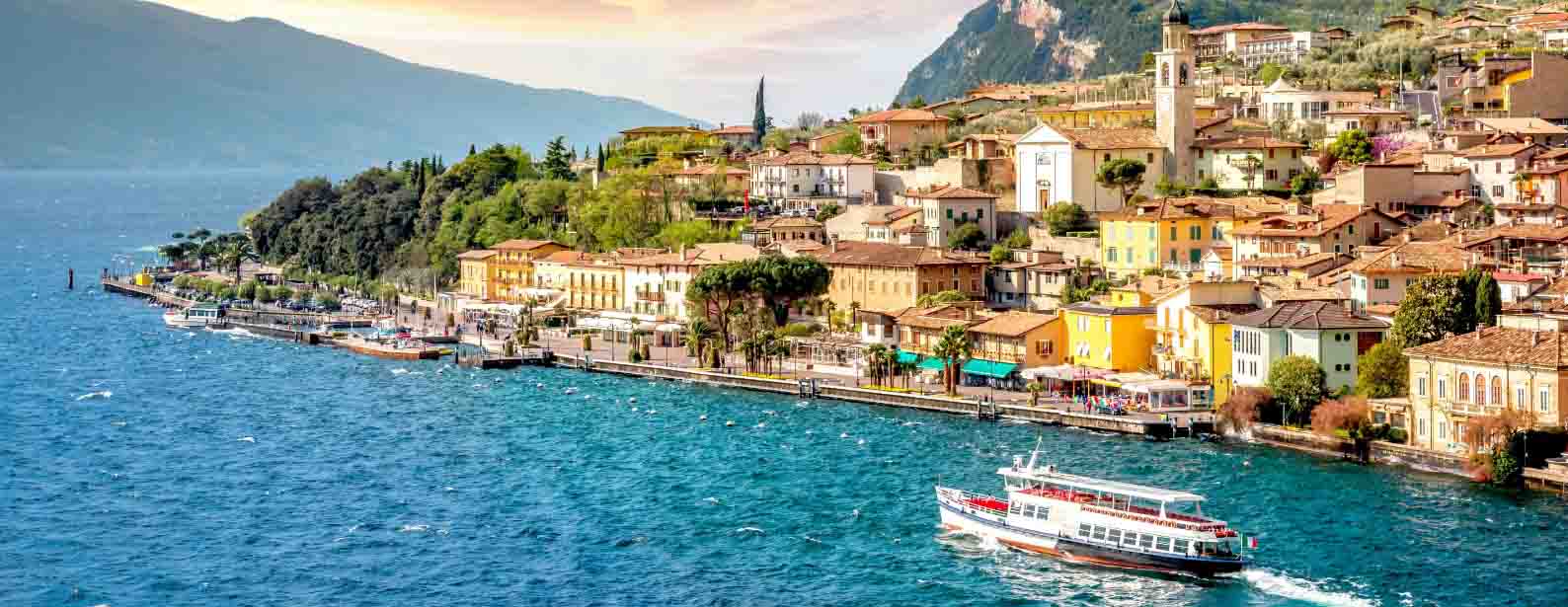
When people picture Italy, it often starts with a long flight to Rome, and then Sicily and Sardinia come up first. Fair enough, they're stunning. But a second tier of islands sits scattered across the Mediterranean, Tyrrhenian, and Adriatic seas. And the best part, they get a fraction of the crowds.
Why do these islands matter? Travelers want places that feel unhurried and closer to nature. While the popular beaches are packed, the secondary islands offer peace and serenity.
Most travelers still haven't discovered these hidden gems because of access. Fortunately, flights and ferry connections have improved over the past few years, so a place that used to take real effort to reach is now a doable long weekend.
Rome Fiumicino (FCO) is the easiest way in for a US traveler, and from there, a domestic flight, a train, or a ferry gets you the rest of the way to somewhere quiet.
This guide breaks down the island groups worth the extra legwork, how to get there from Rome, and which US hub gets you there for the least money.
The Hidden Island Gems in Italy That Deserve To Be Discovered
Rome Fiumicino connects to domestic airports, high-speed rail, and the ferry ports that serve these archipelagos, making it the natural starting point. If you are up for some adventure and fun, here are the best hidden islands you can discover in Italy.
The Campanian Archipelago
Sitting in the Bay of Naples, this group is the easiest to reach of the bunch. A high-speed train from Rome to Naples, followed by a 30- to 90-minute ferry or hydrofoil, gets travelers to any of these islands in half a day.
Procida is the pick for travelers chasing something off-beat, with all pastel fishermen's houses and far calmer than its famous neighbors, even after its turn as Italy's Capital of Culture in 2022.
The Pelagie Islands
Closer to Tunisia than to mainland Italy, the Pelagie group is sometimes nicknamed the Caribbean of Europe for its water color alone. Most US travelers connect through Rome and take a domestic flight straight to Lampedusa, particularly in summer when that route runs most frequently.
The Pelagie Islands house one of the best beaches in the world, Rabbit Beach. With its blinding white sand and clear, shallow water, it is a beauty to admire. However, Lampedusa often steals the show. Another highlight is Pantelleria, which you can reach via Palermo or Trapani rather than the Pelagie route.
The Aeolian Islands
In northern Sicily, the Aeolian Islands stand as a UNESCO World Heritage Site. The Aeolian Islands are volcanic and rugged, becoming more dramatic and diverse the deeper you go. Located close to Catania (CTA), travelers fly to Rome and take a connecting ferry to Catania.
To witness an active volcano, you can take a ferry ride to Stromboli and Vulcano. Stromboli in particular still puts on a lava show most nights. Salina is greener and quieter, known for capers and Malvasia wine rather than nightlife. Panarea leans upscale, with a small, glossy party crowd in high summer.
The Egadi Islands
With a slower pace and laid-back beauty, the Egadi Islands attract travelers for different reasons. They are popular for cycling, historic tuna-fishing quarries, and relaxing. The archipelago consists of three main islands. Favignana is a butterfly-shaped island and a main attraction for many. Levanzo is the smallest inhabited island with postcard beauty and white villages. Marettimo is all about wilderness, standing as one of the most remote, mountainous, and rugged islands.
From Rome, you can easily reach Palermo or Trapani via a flight, then hop on a ferry for a short ride.
Getting From Rome to Each Island Group
Heading to Procida or anywhere else in the Campanian group? Hop on a high-speed train from Rome to Naples, which takes a little over an hour, then catch a short hydrofoil across the bay.
It takes a little longer to reach the Aeolian Islands. Take a short flight from Rome to Catania, followed by a ferry ride, which normally takes five to six hours, depending on which island you want to visit. Stromboli and Vulcano take longer compared to Salina and Panarea, so be sure to check the timings for your destination island.
To reach the Egadi Islands, fly from Rome to either Palermo or Trapani. From there, you can board a ferry that will take you to Favignana, Marettimo, or Levanzo. The ferry ride is relatively short and takes no longer than an hour.
Lampedusa is just a domestic flight straight from Rome to Lampedusa Airport. About two hours in the air and you're there, no boat required.
One thing worth planning around is that these connections don't always line up perfectly with your Rome arrival time. If your flight lands in the afternoon, you might not make the last ferry or train of the day. Build in a buffer, even just one night in Rome or Naples before moving ahead.
Getting to Rome from the US
Rome Fiumicino is Italy's busiest international airport and has the most nonstop options from the US, which is part of why it works so well as a launch point for island hopping. The fares below are shoulder-season ranges rather than fixed prices, since they shift with how far out a traveler books and how flexible the dates are.
New York (JFK/EWR)
The most competitive route out of the US, New York airports connect with Rome, offering multiple airline options. This includes ITA Airways, Delta, and American. JFK and EWR offer frequent nonstop departures most days, improving connectivity. The competition tends to keep round-trip fares toward the lower end, generally in the $500 to $700 range during shoulder season.
Miami (MIA)
ITA Airways offers nonstop flights between MIA and Rome year-round. Recently, American Airlines also introduced nonstop service from Miami to Milan as an additional gateway. Fares are normally in the range of $600-$800 during the shoulder period, slightly more expensive than in the Northeast gateways, but connections are very frequent.
Chicago (ORD)
Chicago ORD has added nonstop ITA Airways service to Rome over the past couple of years, joining United and American on the route. Fares tend to sit in a similar $600 to $800 band, and the added competition has helped keep pricing reasonable for a Midwest departure.
Los Angeles (LAX)
The flight from LAX to Rome is the longest in the bunch and the only one that is always nonstop from the West Coast. The price should be closer to $700-$900 because of the distance, although West Coast travelers can take advantage of a cheaper connection via a European hub such as Frankfurt or Amsterdam.
When Is The Best Time to Book Cheap Rome Flights?
When to book a cheap flight to Rome depends on timing, and that is where most of the savings live. You could do everything, like book an affordable hotel, eat local, shop less, but nothing compares to the expense of a flight.
July and August are the most expensive months here. Everyone wants to be in Italy in high summer, so Rome fares climb to their yearly peak and stay there. It's not just the flight either. Lampedusa and Procida get genuinely crowded in that window, so hotel rates creep up right along with the airfare. And good luck finding a ferry seat without booking weeks ahead.
Spring and fall are where things get good. April through June on one end, September into October on the other, this is when the water still feels warm, ferries run their full summer schedules, and Rome flight fares tend to ease off that peak-season high.
Winter can be different, as you will see the cheapest Rome fares of the year. But January or February can be the time when a lot of the island ferry routes either cut way back or stop running altogether.
So how do you actually find a cheap flight? Here are a few tips that can help you.
- First, give yourself lead time; maybe three to six months in advance is often the sweet spot for catching shoulder-season pricing before it firms up.
- Second, stay flexible on the day of the week if you can. Tuesday and Wednesday departures are almost always cheaper.
- Don't overlook the red-eye. Nobody loves an overnight flight, but landing in Rome the next morning is the cheapest way in.
FAQ
What's the best airport for reaching Italy's lesser-known islands?
Rome Fiumicino (FCO), since it has the most nonstop connections from the US and links to the domestic flights, trains, and ferries that serve the Aeolian, Egadi, Campanian, and Pelagie island groups.
How do I get to Lampedusa from the US?
Fly into Rome, then take a domestic flight straight to Lampedusa Airport, a route that runs most frequently in summer and takes around two hours.
Which lesser-known Italian island is easiest to reach?
Procida, in the Bay of Naples, since it only requires a high-speed train from Rome to Naples followed by a short ferry or hydrofoil ride.
When should I book flights to Rome for the cheapest fares?
Shoulder season, meaning April through June or September and October, tends to bring lower fares than summer, along with better weather for island hopping. Booking three to six months ahead helps lock in those rates.
Do I need to fly into Sicily to reach the Aeolian or Egadi Islands?
Not directly. Most US travelers fly into Rome first, then connect domestically to Catania for the Aeolians or Palermo and Trapani for the Egadi group, before finishing the trip by ferry.
Rome gets you into the country. The ferry, the hydrofoil, or that last short flight gets you somewhere quiet.
Explore Related Stories